
Outcome
A complete playable route
Start card → 4–8 numbered clue stations → finale. The host can run it with paper and a writing tool if those are already on hand.
Make · complete experience · free
A reuse-first indoor treasure hunt for a small group, with a complete host sequence, scalable quantities, conservative safety boundaries, an owned-items-aware budget planner and downloadable working files.
Outcome
Start card → 4–8 numbered clue stations → finale. The host can run it with paper and a writing tool if those are already on hand.
Boundary
Envelopes, tape, a treasure box and purchased prizes are optional. Each has a no-purchase alternative in the planner.
Evidence state
The quantity and budget logic is deterministically tested. ICU is not claiming that this generated experience was run in a real home.
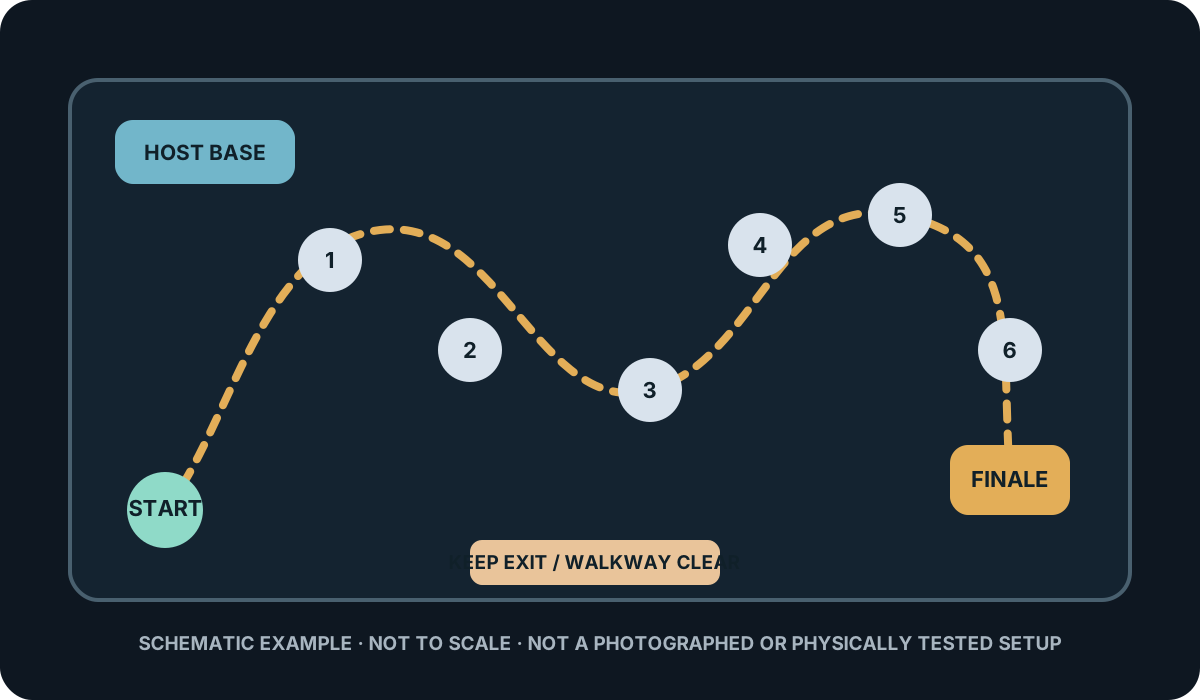
ICU-authored schematic example · not to scale · not a photographed or physically tested setup. Choose locations that fit your actual space and safety boundary.
5 min
Choose one room or a few connected rooms on the same safe level. Identify 4–8 reachable clue stations and one host/finale position.
Completion check: Every station is reachable by ordinary walking and the route leaves exits and walkways clear.
5 min
Number the stations in order. Record the exact location and the clue template you will use at each stop.
Completion check: The host map shows Start → every numbered station → Finale with no ambiguous jump.
10 min
Create one start clue, one clue for each station and one finale note. Number the backs so the host can recover the sequence if a card moves.
Completion check: There are stations + 2 cards and every card points only to the next intended stop or finale.
5 min
Use paper tokens, already-owned small objects or simply a finale card that grants a group choice such as choosing the next song, game or story. No purchased prize is required.
Completion check: The finale works even if nothing is bought and does not depend on food, cash or a restricted item.
5 min
Place or lightly contain each clue where players can retrieve it without climbing, opening restricted storage, moving heavy furniture or entering a hazardous area.
Completion check: Each clue can be reached from normal standing or seated height and no clue blocks a door, exit or walkway.
5 min
Walk the full route yourself in order, read every clue from the player perspective and confirm the physical path is clear.
Completion check: The host can solve the route start to finish without guessing, touching hazards or leaving the approved play boundary.
35 min
Explain the boundary and the no-climbing/no-forcing rule. Give the start clue, stay available, and offer a hint if the group is stalled rather than encouraging risk-taking.
Completion check: Players reach the finale using the planned sequence; any unsafe or confusing station is skipped immediately.
10 min
Collect every card, token and temporary attachment; restore moved lightweight objects; note any clue that was unclear before reusing the plan.
Completion check: All temporary materials are accounted for and the play space is returned to its pre-hunt condition.
Use these original templates to write clues for your own safe locations. The host map, not the decoration, is the source of truth.
Look closely
Describe one visible feature at the next safe station without naming it directly.
Count and choose
Ask players to count a visible set of harmless objects; the answer selects one of two clearly labeled clue cards.
Word fragment
Give 2–4 letters from the safe location name and one plain-language hint.
Shape or color
Describe a color, shape or texture visible from normal standing height near the next station.
Crew memory
Reference something the group already saw earlier in the route, then point to the next safe station.
Finale
The last clue sends everyone back to the host or to a visible final location; no hidden compartment is required.
The planner recalculates quantities from participants and clue stations. Pack costs are never guessed. If an active purchase is missing pack quantity or price, the total remains unknown rather than treating the missing value as $0.
These are conservative operating limits for this ICU experience. If a real location is uncertain, the plan response is to skip it rather than guess.
all clue cards, all paper or physical tokens, all temporary holders, all temporary attachment material.
remove temporary attachments; return lightweight moved objects; recycle or store paper pieces; record clue edits for next use.
All cards and temporary materials are accounted for, the room is reset, and any confusing clue is noted before reuse.
This experience has no required shopping links, affiliate links, direct offer or purchase step. If you already have the two core material categories—paper and a working writing tool—the reuse-first version can be completed without buying anything. The O029 commerce resolver therefore adds no merchant destination here rather than inventing a shopping need. The planner only shows $0 external spend after you explicitly mark the remaining required items as owned. Read the commerce policy.