Five reviewed entries show why “beautiful color” is not one scientific category. The essay keeps mechanism claims source-scoped and uses comparison only as editorial synthesis.
The common thread here is a visual question, not a shared cause: why does color become the dominant experience of a material or surface? Each section returns to its own reviewed claim and sources before any comparison is made.
Media boundaryVisualization — source-backed explainer, not documentary media. This local SVG remains explanatory media, not documentary source media.
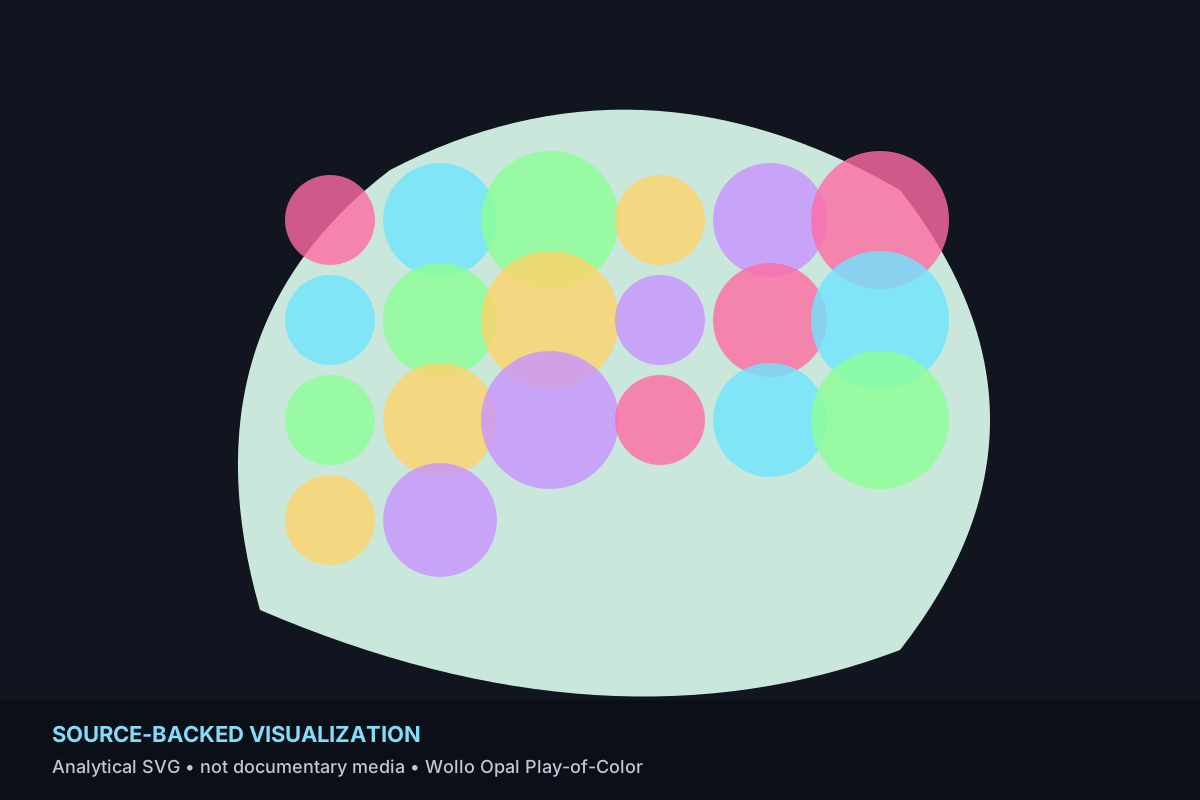
A Wollo opal can break light into shifting spectral patches known as play-of-color.
Source-backed record
The Smithsonian identifies the Wollo, Ethiopia opal specimen. GIA explains that opal play-of-color arises from light interacting with orderly arrays of microscopic silica spheres, producing diffraction-related spectral color.
This section is included because the essay is comparing how the visual question changes at this point in the sequence. That placement is editorial; the factual statements above remain scoped to the cited record and sources.
Media boundaryVisualization — source-backed explainer, not documentary media. This local SVG remains explanatory media, not documentary source media.
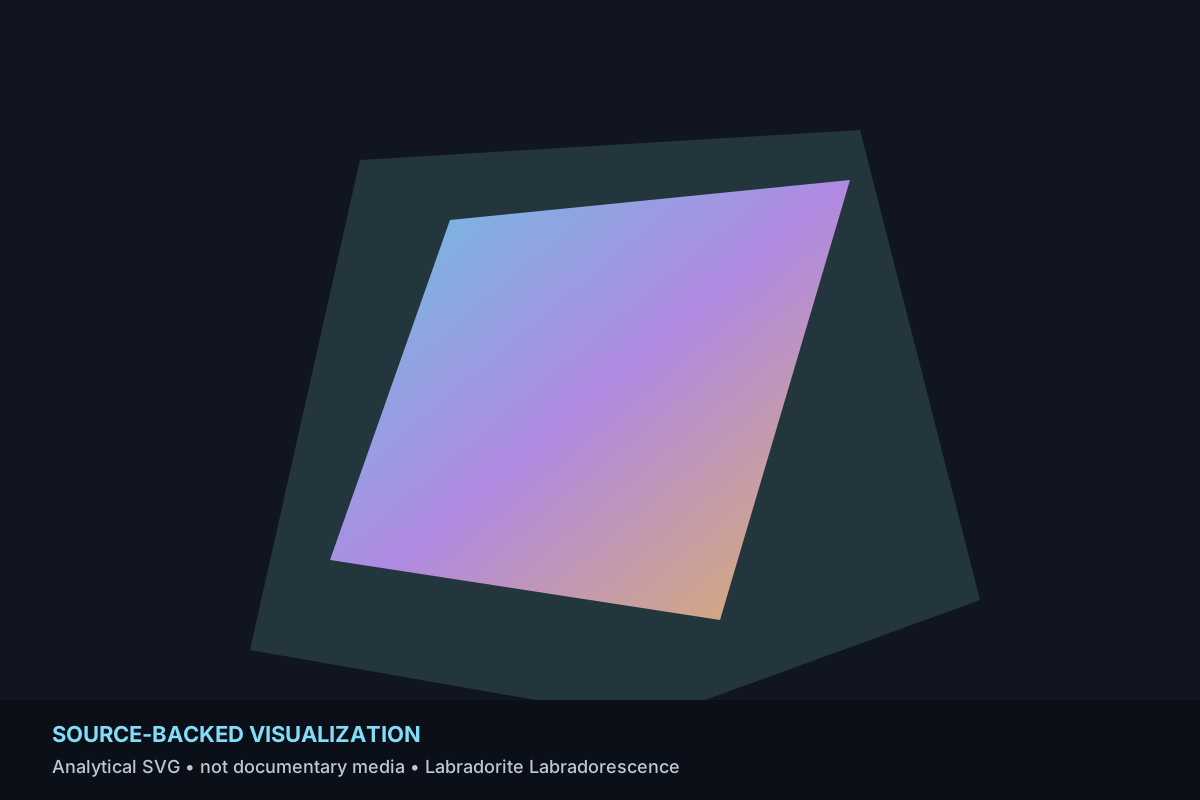
Labradorite can flash bands of blue, green and other colors as its orientation to light changes.
Source-backed record
The Smithsonian specimen demonstrates labradorite iridescence; gemological explanation attributes labradorescence to interference from thin internal lamellar layers, making color change strongly with viewing geometry.
This section is included because the essay is comparing how the visual question changes at this point in the sequence. That placement is editorial; the factual statements above remain scoped to the cited record and sources.
Media boundaryVisualization — source-backed explainer, not documentary media. This local SVG remains explanatory media, not documentary source media.
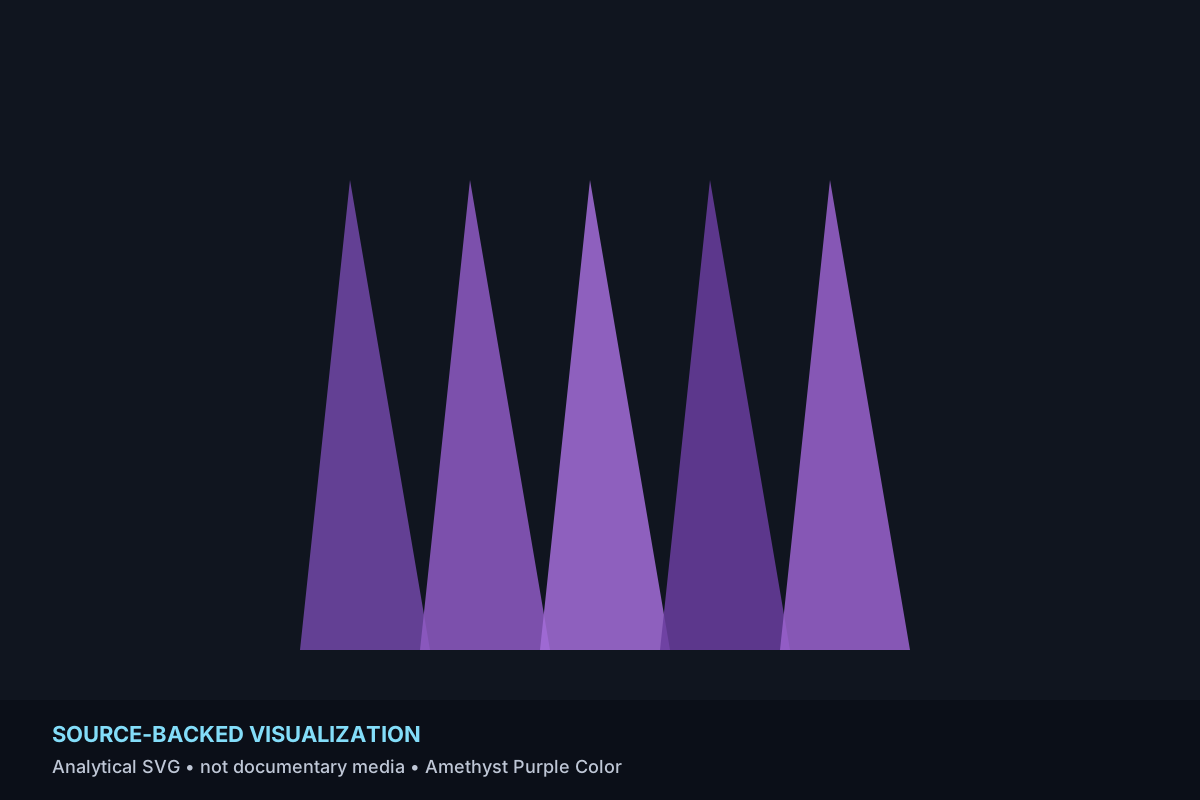
Amethyst’s purple color can range from pale violet to saturated purple within transparent quartz.
Source-backed record
The Smithsonian identifies the amethyst specimen. Gemological research describes amethyst purple as associated with iron-related color centers activated by natural irradiation; this is a general mechanism and is not asserted as a specimen-specific chemical analysis.
This section is included because the essay is comparing how the visual question changes at this point in the sequence. That placement is editorial; the factual statements above remain scoped to the cited record and sources.
Media boundaryVisualization — source-backed explainer, not documentary media. This local SVG remains explanatory media, not documentary source media.
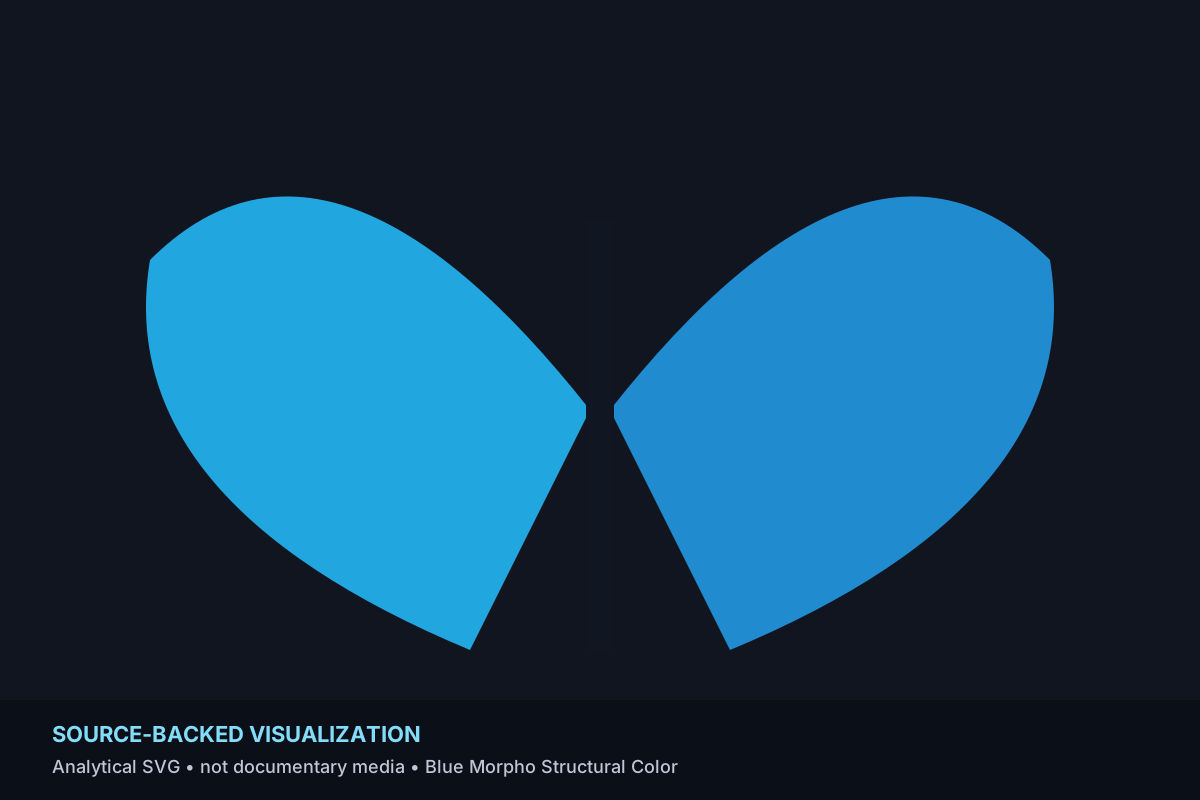
A blue morpho butterfly produces brilliant blue through microscopic wing-scale structure rather than blue pigment alone.
Source-backed record
Smithsonian educational material explains that microscopic grooves and layers in morpho wing scales selectively reinforce blue reflected light while other wavelengths cancel, producing intense structural color.
This section is included because the essay is comparing how the visual question changes at this point in the sequence. That placement is editorial; the factual statements above remain scoped to the cited record and sources.
Media boundaryVisualization — source-backed explainer, not documentary media. This local SVG remains explanatory media, not documentary source media.
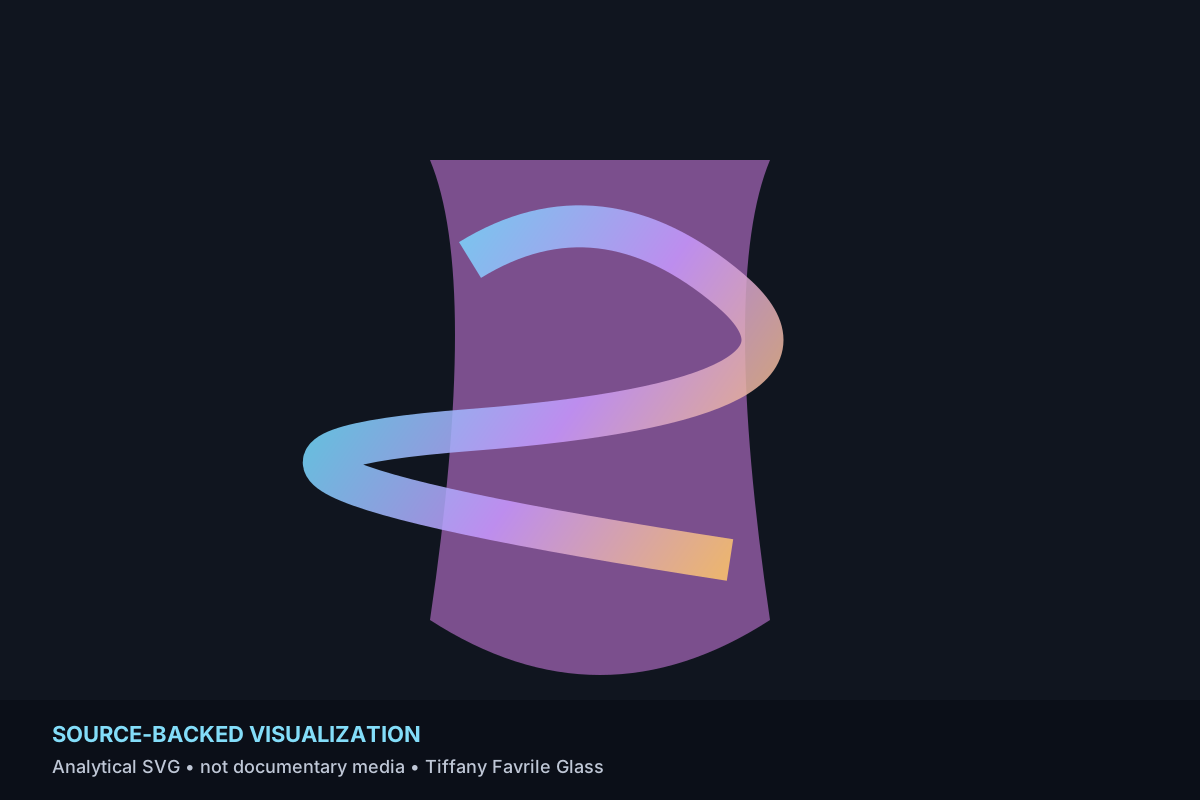
Tiffany Favrile glass uses surface color, transparency and finish to make a vessel change character with light.
Source-backed record
The Met identifies the 1893–96 vase as Favrile glass by Louis Comfort Tiffany / Tiffany Glass & Decorating Company and describes Tiffany’s interest in natural and ancient-glass color effects. BVU treats the rendered surface bands as a curated visualization, not a reproduction.
This section is included because the essay is comparing how the visual question changes at this point in the sequence. That placement is editorial; the factual statements above remain scoped to the cited record and sources.
Visual analogy
The recurring visual analogy is luminous or shifting color across unlike materials and organisms. It is resemblance used for discovery, not evidence that the same physical mechanism applies to every example.
Editorial conclusion
Placed together, these records show how a visual atlas can compare appearances while refusing to collapse diffraction, structural color, mineral coloration and crafted glass into one explanation. That conclusion is editorial synthesis, not a new source-backed mechanism.
Connected discovery
Continue through reviewed visual records
These parent recommendations are bounded and non-sponsored. Curated journey order does not change canonical relationship evidence.